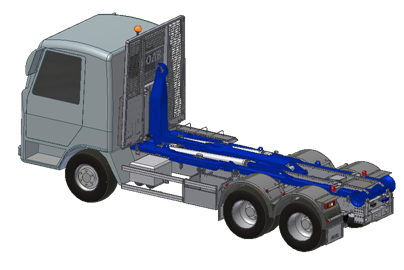
 JOAB's hooklifts are multipurpose. They can be used with all vehicle manufacturers. However, it is important that the vehicle has been built specifically for the purpose of bearing a hooklift
It is important to verify that the vehicle has the correct axle distance and wheelbase.
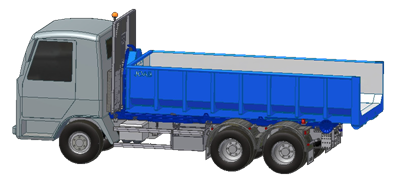 JOAB’s hooklifts are designed to transport different types of bodies that have been manufactured according to the Swedish standard SS‑3021.
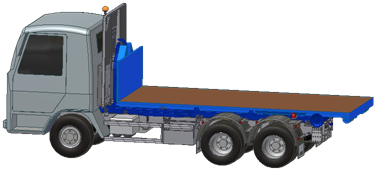
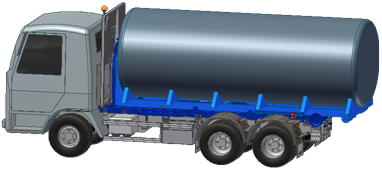
These typically include: dump bodies, flatbeds, and containers, as shown.
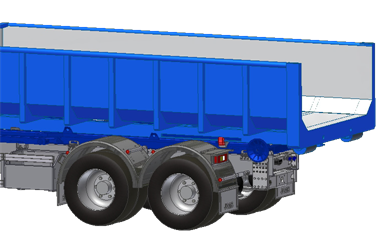 Mounting the hooklift onto a vehicle that has not been specifically designed for the purpose of carrying a hooklift will increase the risk of an abnormal load on the vehicle. This in turn can lead to serious injury or damage.
Correct Usage
Incorrect use of JOAB's products can lead to material fatigue and cause excessive wear to the hydraulics and its components. The service life of the product can be reduced and in the worst-case lead to breakdown.
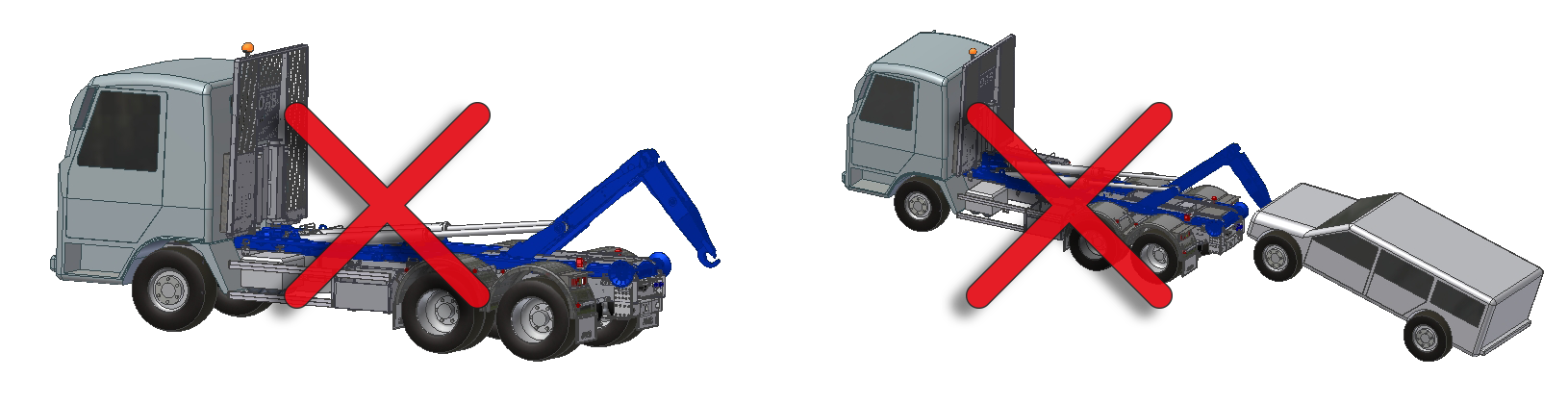
Do not drive the vehicle with the hooklift extended. It must be fully retracted.
Do not use the vehicle for any other purpose than its intended use.
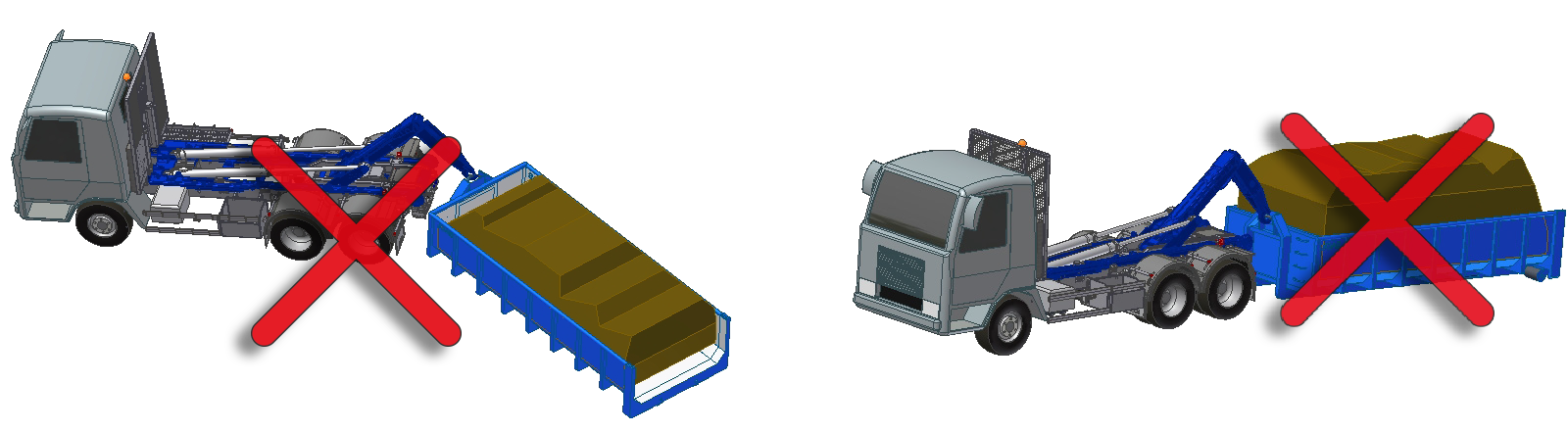
Make sure to reverse straight towards the body. Do not reverse at an angle.
Do not lift loads that exceed the hooklift's specifications.
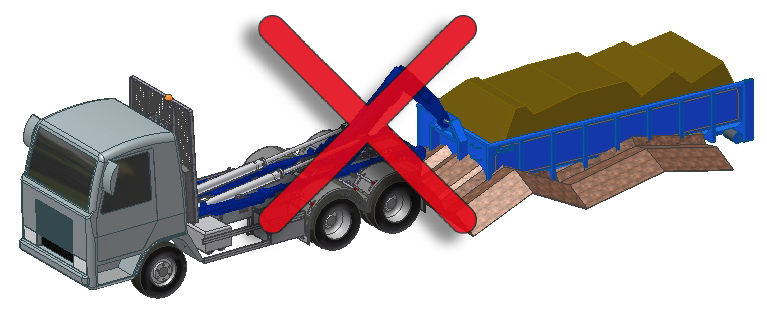
If the body becomes stuck, observe caution. The hooklift can easily be damaged.
Hooklift Components
The hooklift consists of the following main components: a frame, cylinders, auxiliary-lifting-arms, and a post with a lifting hook (made of high tensile steel).
-
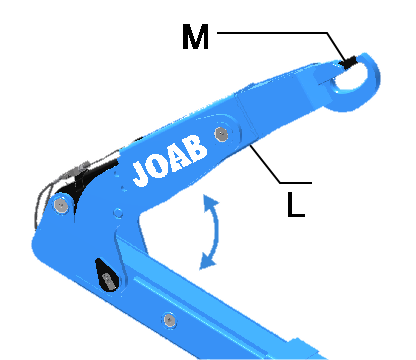 Intermediate section
 - Hook
- Hook post
- Extending section
- Sub frame
- Auxiliary lifting arm
- Centre lock
- Inner rear section
- Hydraulic lock
- Rollers
- Spreader flap deployer (accessory)
- Folding hook post (LA models only)
- Safety hook (LA models only)
LA-Model Hooklifts
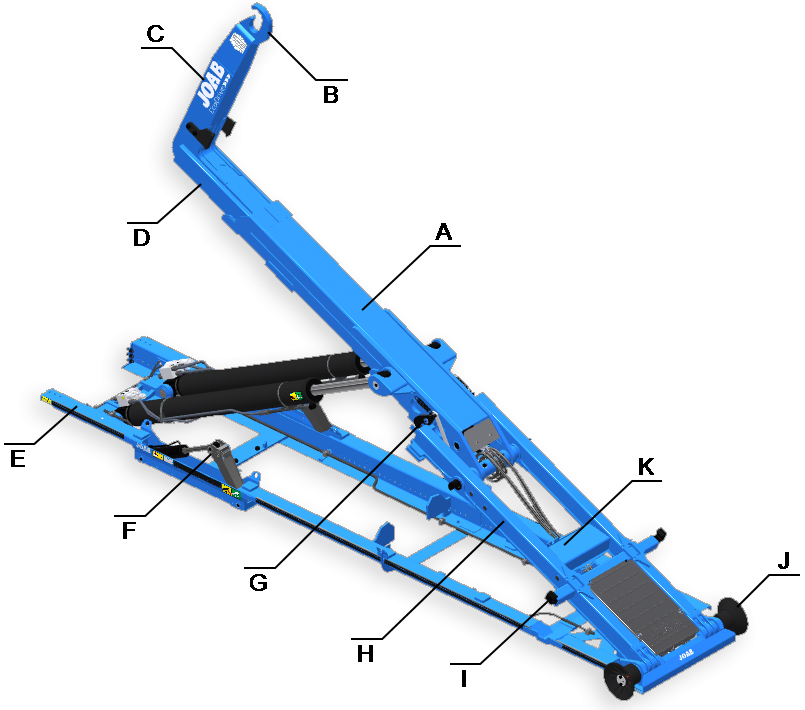
LA-models are equipped with both a folding-hook-post (L) and a safety-hook (M), as shown above.
The folding-hook-post is used to allow for low lifting angles. The hook-post can be moved upwards and downwards as required to assist the downloading of a body. It is operated using the cab controller for the hooklift.
The safety-hook is used to lock the hook onto the lifting bracket of a body and is operated from the cab.
Optional Locking Mechanisms
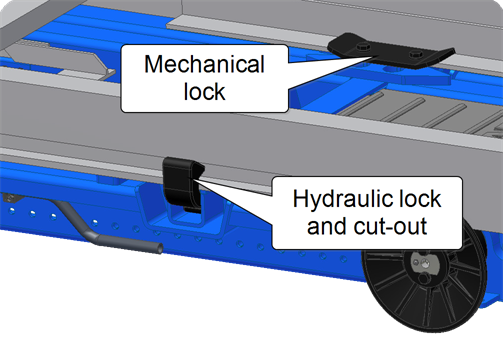 JOAB's hooklifts can be purchased with optional body locking devices. These options are in addition to the governing standards relevant to each country.
For information regarding the relevant body standard, refer to "Body Standard".
An internal-mechanical lock or hydraulic lock can be purchased as an option, as shown opposite.
If a hooklift with external hydraulic locking is purchased, the body must have cut-outs in its frame, as shown. If the body does not have cut-outs, it will not be secured during transport!
If a hooklift with internal-mechanical locking is purchased, make sure that the locks engage the body correctly. If they do not engage correctly, the body will be transported unsecured!
Manufacture Plate
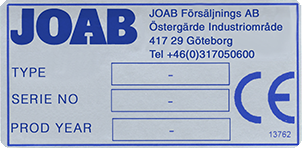 All hooklifts have a manufacture-plate located on the front left-hand side of the sub frame. The information on the manufacture-plate must be provided in the event of making a claim or when ordering spare parts from JOAB.
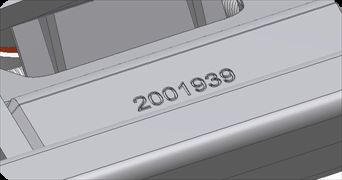 In addition to the manufacture plate, the manufacture number is a also stamped onto the cylinder cross member, as shown.
Design
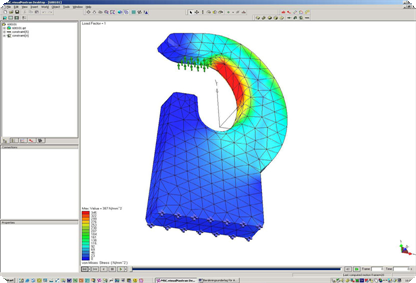 JOAB's products are subjected to demanding tasks and must be of the highest quality. All of JOAB's components and constructions are thoroughly tested. Simulations for calculating: load capacity, durability, and service life are performed on all components
 All development and manufacture is performed by JOAB. We are ISO 9001 and ISO 14001 certified.
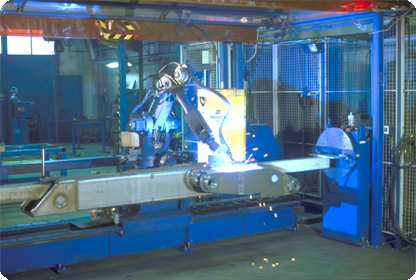 A large proportion of our production is automated. This guarantees high quality in the manufacturing process.
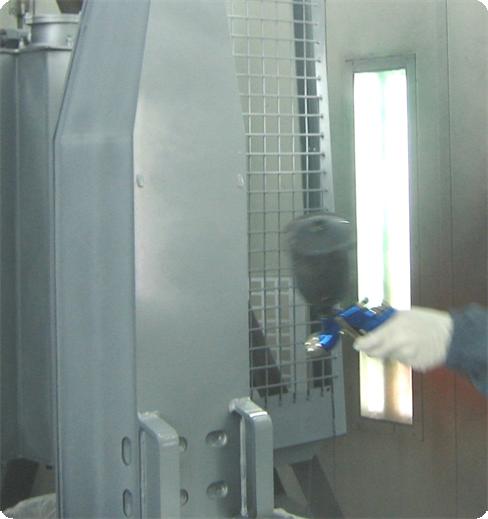 JOAB's painting facilities meet all applicable environmental requirements.